Tarek Zahid

AI Engineer | Energy & Mobility Systems

MS in Electrical & Computer Engineering from UNLV. Building intelligent systems for sustainable transportation and energy management through AI and data science.

Programming & Tools: Python, SQL, MATLAB, Git, Linux, Docker

Machine Learning & AI: PyTorch, TensorFlow, Scikit-learn, Deep Learning, Neural Networks, Graph Neural Networks

Data Science & Analytics: Pandas, NumPy, Jupyter, GIS Tools, Data Visualization, Statistical Analysis

Bio

Transportation infrastructure generates massive amounts of data, but turning sensor feeds into actionable insights for congestion, safety, and emissions remains a persistent challenge. I build open platforms and AI models that bridge research and operations—tools that work with messy, real-world data and deliver value to public agencies.

My journey started with computer science foundations and early work on large-scale digital infrastructure—civil registry systems, healthcare data platforms, and government service delivery—where I learned to design technology that scales to millions while meeting operational constraints like incomplete data, regulatory requirements, and 24/7 uptime across diverse stakeholders.

At the University of Nevada, Las Vegas, I shifted focus to U.S. transportation infrastructure through the USDOT REPS Tier 1 University Transportation Center, publishing in top IEEE venues:

IEEE ITSC 2024: "Using Deep Traffic Prediction for EMFAC Emission Estimation and Visualization"
IEEE ICVES 2024: "Benchmarking/Limitations of Traffic Prediction with Noisy Field Measurements"

My core innovation is graph neural networks with masked training that predict traffic patterns from noisy/missing sensor data—deployed across ~1,000 Nevada DOT freeway sensors.

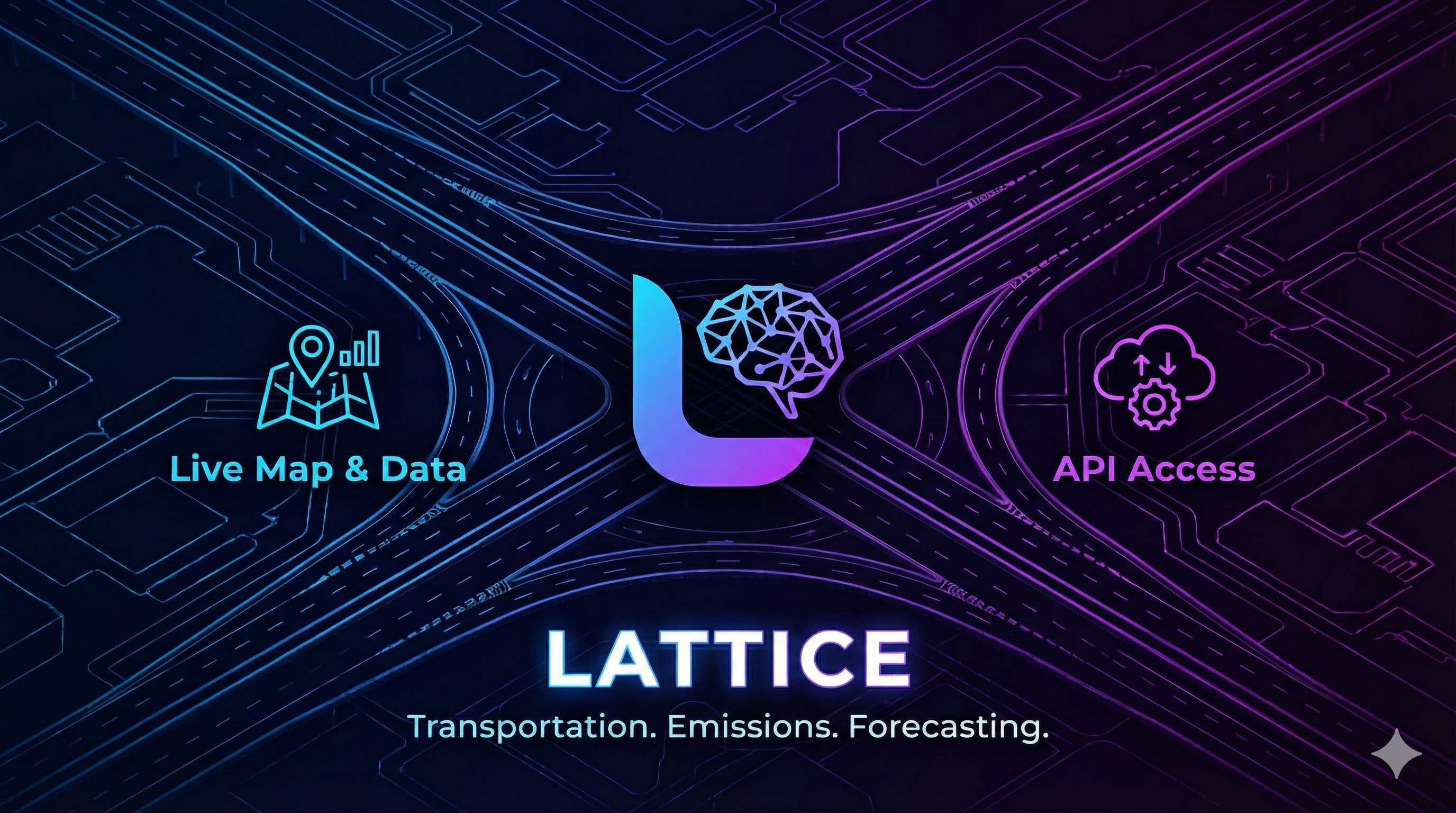
Currently building Lattice, an open transportation analytics platform hosted at UNLV that provides real-time traffic prediction, corridor-level emissions estimation (EMFAC integration), interactive visualization, and REST API for agency use.
Research & Projects

Selected projects built to be useful, measurable, and real.

Graph-based Traffic Transformer Dashboard Platform
JAN 2026

Graph-based Traffic Transformer Dashboard Platform

Platform concept for real-time traffic operations combining graph neural networks with transformer forecasting. Includes KPI monitoring, congestion trend views, and short-horizon predictions for network-level decision support.

Traffic AI GNN + Transformer Dashboard Forecasting
Industrial AI Computer Vision
AUG 2024

Industrial AI & Computer Vision Platform

Real-time factory surveillance and automation using YOLO object detection, MediaPipe hand tracking, and multi-stream video processing. Deployed at Haig's Quality Printing for production monitoring and quality control.

YOLO v8 OpenCV PyTorch Computer Vision
AutoNav-ROS Autonomous Robot
MAR 2024

AutoNav-ROS: Autonomous Mobile Robot Navigation

Building production-grade autonomous navigation from scratch—differential drive kinematics, SLAM mapping, and PID control on Jetson Nano hardware running ROS Melodic. Educational robotics platform demonstrating embedded systems principles.

ROS Melodic Python SLAM LiDAR
Atmospheric Descent Control
MAY 2023

Atmospheric Descent Control Analysis

Simulating reusable launch vehicle descent with adaptive control strategies—RCS thrusters, hybrid aerodynamics, and grid fins across 40km atmospheric transition. 6-DOF dynamics with PID-based trajectory correction.

Control Theory Python NumPy/SciPy Aerospace
Human Activity Recognition
NOV 2018

Human Activity Recognition Challenge

Competing in Sussex-Huawei Locomotion Challenge 2018—classifying walking, running, biking, and transit modes from smartphone IMU data using ensemble decision trees and wavelet features. Achieved 82.8% accuracy with resource-efficient algorithms.

MATLAB Machine Learning Signal Processing Wavelet Analysis

Let's Work Together

Interested in collaborating on projects in energy engineering, machine learning, or sustainable transportation? Let's connect.